

What we offer
LBFS does two things. We help families understand and plan for protection, retirement and legacy. We also help qualified adults explore a supported path to an independent financial-services business. Here is how each works, in plain language.
Two ways we help
Choose the one that fits you
For families and business owners
Education-first help to clarify protection, retirement and legacy priorities, with clear roles and no pressure.
Explore Financial Solutions →For professionals exploring a business
A candid look at an independent business built through education, leadership, mentorship and an established platform. Read on.
Read the full overview ↓The big picture
Employment, entrepreneurship and a changing world of work
Most people consider two routes to building a better financial future. Each has real strengths, and each has real trade-offs.
Employment
Can offer stability: a regular paycheck, defined responsibilities, often benefits, and colleagues who share the load. For many people it is the right choice.
Traditional entrepreneurship
Can offer independence and ownership. It can also require capital, time, product development, employees and a tolerance for uncertainty.
A third path?
Independence combined with an established platform, products, training and support, for people who want to build something of their own without inventing every part of it.
4.1M+
Americans turning 65 annually through 2027, creating new retirement and financial decisions[1]
39%
of workers' existing skills employers expect to change or become outdated by 2030[2]
$124T
projected to transfer to spouses, heirs and charities through 2048[3]
Employment projections are global estimates and do not predict the future of any specific occupation, employer or individual. Market and demographic statistics do not predict business income or success.
Employment can provide stability. Entrepreneurship can provide ownership. But work itself is changing, and financial resilience increasingly means having skills, assets and options that are not tied to one employer. What if a Plan B were something you built before you needed it?
The saver's path
Investing $12,000 at the end of each year for 40 years at a hypothetical annual return of 7% would grow to approximately $2.4 million. A meaningful result, and a reminder of how much time and consistency traditional wealth accumulation can require.
- $12,000
- per year
- 40
- years
- $2.4M
- approx., hypothetical
The founder's path
Independence and ownership, but often capital, product development, employees, infrastructure and outside investors. None of this is a criticism. Founders build much of the economy we rely on. It is simply a long list, and each item takes time, money and risk.
The cost of waiting
Investing $12,000 at each year-end at a hypothetical 7% return: about $2.40M over 40 years versus about $1.13M over 30 years. Ten fewer years reduces the hypothetical ending value by approximately $1.26 million, even though the difference in contributions is only $120,000.
Hypothetical mathematical illustration only. Assumes a constant annual return, annual year-end contributions and no taxes, fees, inflation or volatility. It does not represent any product or guaranteed result, and does not estimate or imply earnings, profitability or business value from the opportunity described here. The Crunchbase analysis involved a specialized sample of technology companies and is not representative of all businesses. Business survival data are for U.S. establishments generally.
The third path
An opportunity to build something of your own
There may be a third path: building an independent, licensed business in the financial services industry through an established platform.
Depending on licensing, certifications, carrier appointments and platform availability, the business may include life insurance, annuities, health insurance and Medicare-related insurance products. Additional financial-services capabilities may become available in the future and would require the appropriate licenses, registrations and approvals.
It remains a real business. It requires licensing, relationship building, consistent effort and a willingness to learn. Results are not automatic or guaranteed.
What it is
- An independent, licensed business in financial services
- Built through an established platform
- Supported by training and mentorship
- A path to explore business ownership through licensed client service
What it is not
- A job with a salary or benefits
- A shortcut or a guaranteed income
- A passive investment or guaranteed source of income
- Right for everyone
What does it cost to begin?
As of November 2026, getting started requires a one-time $199 technology-platform access fee. Separate licensing, examination, background-check, errors-and-omissions insurance and other business costs may apply. Fees are subject to change and vary by state, carrier and individual circumstances. The current written schedule of required and optional costs is reviewed during the due-diligence conversation.
Participation is subject to licensing, carrier appointments, representative agreements and program rules. Full terms are reviewed in the written documents.
The financial-education gap
Information is everywhere. Understanding is not.
Financial information has never been easier to find. But information is not the same as knowledge, and none of it automatically creates confident action.
47%
average share of personal-finance questions U.S. adults answered correctly in 2026, the lowest in the index's ten-year history[6]
25%
of U.S. adults showed very low financial literacy in 2026, up from 20% in 2017[6]
$5.2T
U.S. consumer credit outstanding in September 2026, excluding real-estate-secured debt[7]
The 47% figure comes from a nationally representative 2026 survey of 3,602 adults. Financial-literacy and consumer-credit statistics describe broad national conditions. They do not establish that education alone causes wealth or predict demand, income or success for any representative.
The need is personal
Protection, retirement income and legacy planning matter in every economy.
Trust is the scarce part
Products and answers are easy to find. A trusted relationship is not.
Skills can be learned
Listening, educating and following up are skills, not personality types.
The wealth formula
Working hard creates income. Financial education helps turn income into wealth.
Most people are taught how to work for money. Far fewer are taught how money works, or how to turn income into lasting financial strength.
Earn
Build valuable skills and create reliable income
Keep
Manage cash flow, debt, spending and the effect of taxes
Grow
Understand compounding, inflation, the Rule of 72 and appropriate diversification
Protect
Prepare for emergencies and manage health, income, liability and longevity risks
Transfer
Coordinate beneficiaries, estate documents, ownership and charitable intentions
Teach
Pass financial habits and knowledge, not only assets, to the next generation
The Rule of 72
At a hypothetical 7% annual return, money would take approximately 10 years to double. At 3% inflation, purchasing power would be cut roughly in half over approximately 24 years. The Rule of 72 is an approximation, not a prediction.
These principles are not reserved for wealthy families. They can be learned at any income level. Outcomes still depend on income, resources, behavior, time, economic conditions and individual circumstances. Educational only. Hypothetical illustrations; diversification does not ensure a profit or protect against loss. Tax treatment varies and LBFS does not provide tax advice.
Training, AI and lifelong learning
What changes when you don't start with a blank page?
Starting independently does not have to mean figuring out everything independently. An established training, mentorship and support system can provide a clearer starting point and access to people who have already navigated the learning curve. It cannot eliminate the work or guarantee results.
A blank page
- Every decision is new
- Lessons are learned alone
- Progress is hard to measure
A map
- A clearer starting point
- Guidance from experienced people
- Support when it gets difficult
Why continuous learning matters
Employers expect 39% of workers' existing skills to change or become outdated by 2030[2]. OECD research also finds that adults tend to underinvest in training, even when the returns exceed the costs[8].
The lesson is not that experience has lost its value. It is that experience becomes more valuable when it continues to evolve.
Workforce statistics are global employer expectations and multi-country research. They do not predict the outcome for any individual. Training availability, content and quality vary and do not guarantee any result.
Fixed mindset vs. growth mindset
Fixed mindset
“I'm either good at this or I'm not.” Feedback feels like criticism. Challenges are avoided to avoid failing. Change feels like a threat.
Growth mindset
“I can improve with effort and good guidance.” Feedback is information. Challenges are practice. Change is a chance to learn.
A growth mindset does not guarantee success, but it helps people adapt, learn from setbacks and keep improving. The idea comes from psychologist Carol Dweck.
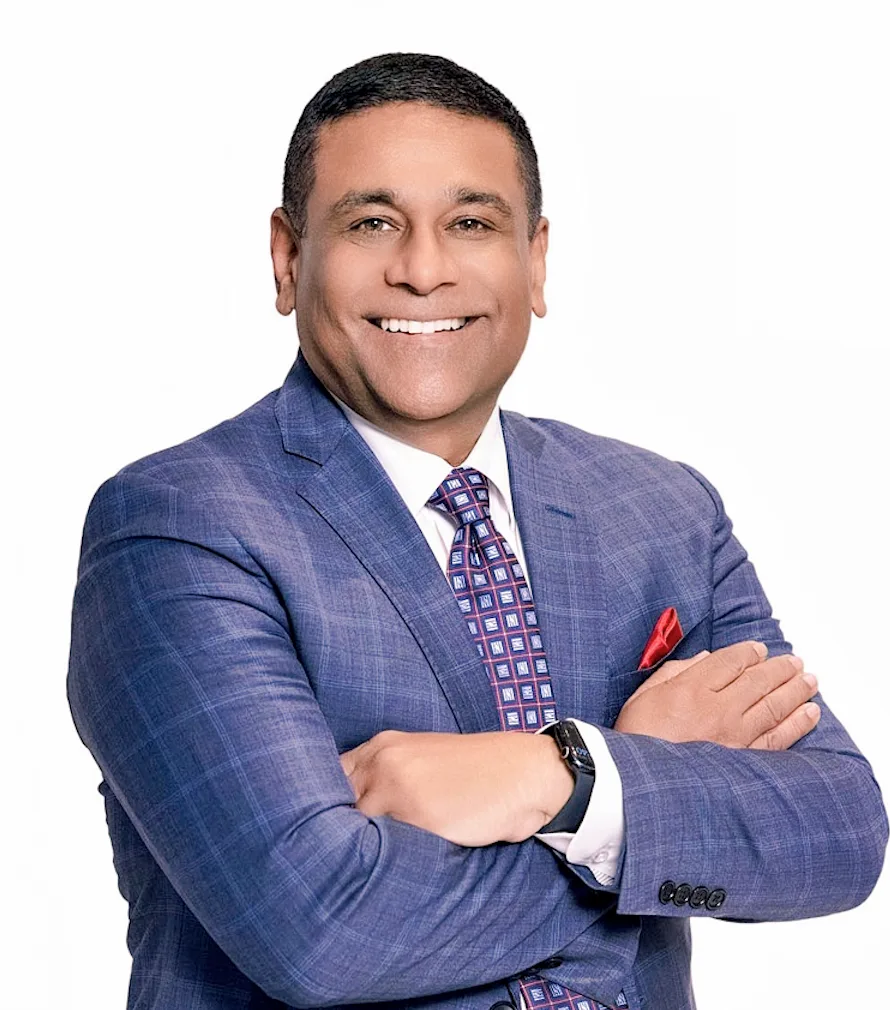
Nanda Sringari
Founder, Legacy Builder Financial Services
Licensed Insurance Producer
Entrepreneur · Husband · Father · Mentor
Why you can trust this conversation
Why should you trust Nanda?
Before you trust the opportunity, know the person inviting you to explore it.
A note from Nanda
I started in engineering and information technology, trained to look beneath the surface and understand how things really work. That mindset led me into entrepreneurship, where I learned that building anything worthwhile takes patience, resilience and good people.
At the center of my life is my family. My wife has been my partner in life and in business, and together we raised three children, now adults. Long before I entered financial services, our family had achieved financial independence. I share that not to impress you, but because it changed how I think about money.
Money matters, but what it makes possible matters more: choices for a family, protection for the people they love, dignity in uncertain times and the freedom to contribute to something bigger.
Eventually, I began asking myself a different question: What should I build next, and who could it help? That question brought me to financial services and led me to found Legacy Builder Financial Services. I want to help families understand money more clearly, and to help the right professionals explore whether this business could fit their future.
I remember the mentors who believed in me, sometimes before I fully believed in myself. Now I want to do the same for others: to recognize potential, tell the truth and stay present when the work gets difficult.
If you're looking for something meaningful to build part-time, or considering a career change, let's have an open, honest conversation. We can explore the possibilities, ask the important questions and see whether there is a genuine fit on both sides. Then you can decide for yourself.
Financial independence is the author's own circumstance, not a representation about anyone's results. Team Legacy includes professionals in the United States and Canada. This page describes the U.S. opportunity; Canadian terms differ.
What drives me
I believe wealth is bigger than a number: it is confidence, protection and the freedom to choose your next chapter. My goal is to help one million families build stronger financial futures and to develop leaders who carry that mission forward.
Education before decisions
You should understand why, not merely be told what to do. I explain first and welcome your questions.
Truth before excitement
We discuss the work, costs, limitations and written terms, not only the possibilities.
People before transactions
I would rather earn your trust than rush your decision. Your family, goals and timeline deserve respect.
The invitation
Do not make a decision from this page
This is not intended to persuade you to start a business. It is intended to help you decide whether this model deserves 30 minutes of thoughtful due diligence.
During the conversation, we will explore:
- Details about the business opportunity in financial services
- What the work actually involves, and how licensing and training work
- How compensation, expenses, chargebacks and renewals are structured, and what company-approved participant data, if available, shows
- What it costs to begin and operate
- How renewals and succession or transfer opportunities may work
- Whether the model fits your goals, schedule and strengths
No obligation. No income promise. No decision required.
Just a candid review of the education, licensing, work, costs, compensation and written agreements.
- 1. Book a 30-minute Zoom conversation.
- 2. Bring your goals, your schedule and your toughest questions.
- 3. Decide on your own timeline, with the facts in front of you.

Scan to book
Know someone exploring a career change or a Plan B? Share this page with them.
How we are compensated
Licensed representatives may receive commissions and other compensation when clients purchase products or services available through the financial-services platform. Compensation, product availability and renewal provisions depend on applicable licenses, certifications, carrier appointments and written agreements. No income is guaranteed.
Nanda Sringari · Legacy Builder Financial Services · Naples, Florida · 267-890-7054 · nanda@thelbfs.com · NPN 21273835
Sources
Where the facts and figures come from
Statistics are from the cited public sources and were reviewed as of November 19, 2026. Figures change; please verify before relying on them.
- [1]Alliance for Lifetime Income, “Peak 65” research: more than 4.1 million Americans turning 65 each year through 2027. allianceforlifetimeincome.org
- [2]World Economic Forum, Future of Jobs Report 2025: employers expect 39% of workers' existing skills to change or become outdated by 2030. Global employer survey (1,000+ employers, 55 economies), not a guaranteed job outcome. weforum.org
- [3]Cerulli Associates, U.S. intergenerational wealth transfer forecast: about $124 trillion through 2048 to spouses, heirs and charities. cerulli.com
- [4]Crunchbase, founder-equity analysis of 104 technology companies at IPO: median founder ownership of 15%. A specialized sample, not representative of all businesses. crunchbase.com
- [5]U.S. Bureau of Labor Statistics, Business Employment Dynamics: roughly half of new private-sector establishments survive five years. bls.gov
- [6]TIAA Institute–GFLEC, 2026 Personal Finance Index: 47% average correct; 25% very low literacy (20% in 2017). 3,602 adults, nationally representative. tiaa.org
- [7]Federal Reserve, Consumer Credit G.19, September 2026 release (November 6, 2026): about $5.2 trillion outstanding, excluding loans secured by real estate. federalreserve.gov
- [8]OECD, Employment Outlook 2025, “Staying in the game: skills and jobs of older workers in a changing labour market.” Multi-country data, not a prediction about an individual. oecd.org
Disclosure and disclaimer
This page is educational only. It is not an offer of employment, a solicitation to purchase any product, or individualized investment, tax, legal or financial advice. The opportunity described is an independent business opportunity. No income is guaranteed, no typical or expected earnings are stated, and participants may earn little or no income and are responsible for their own business expenses. Results vary widely. Participation requires the applicable licenses, carrier appointments, eligibility and acceptance of written agreements, and is subject to program rules. Fees, currently a one-time $199 platform access fee plus licensing, errors-and-omissions and other business costs, are subject to change. Hypothetical illustrations, including the 7% and Rule of 72 examples, are not predictions or promises. Third-party statistics were reviewed as of November 19, 2026, may change, and do not imply endorsement. Insurance and annuity products may have fees, charges and surrender periods, and guarantees depend on the issuer's claims-paying ability. LBFS and its representatives do not provide tax, legal or accounting advice; please consult your own advisers. Edition: November 2026.
Ready for a candid conversation?
30 minutes. No obligation. No income promise.